
Five years ago, a seemingly minor cosmetic feature in Dead by Daylight ignited a firestorm that continues to shape community moderation in 2026. When Behaviour Interactive discovered that players were using Leatherface’s unlockable survivor masks to torment others with racist blackface imagery, the studio took the rare step of ripping the items out of the game entirely—a decision that still serves as a benchmark for how to handle weaponized customization.
Back then, The Cannibal could earn the skin masks of the original four survivors by sacrificing each one 25 times. One of them was Claudette Morel, a Black woman whose face became the most abused tool in a wave of targeted harassment. Reports flooded in of Leatherface players stalking and mocking others while wearing her visage, twisting what was meant to be a grisly trophy into a vehicle for hate. Behaviour didn’t hesitate. “Members of the community have shared their experiences with people targeting and harassing them while using some of these masks,” the studio wrote in a developer blog. “We are not comfortable having these masks in the game when they are used as a tool to spread hate.”
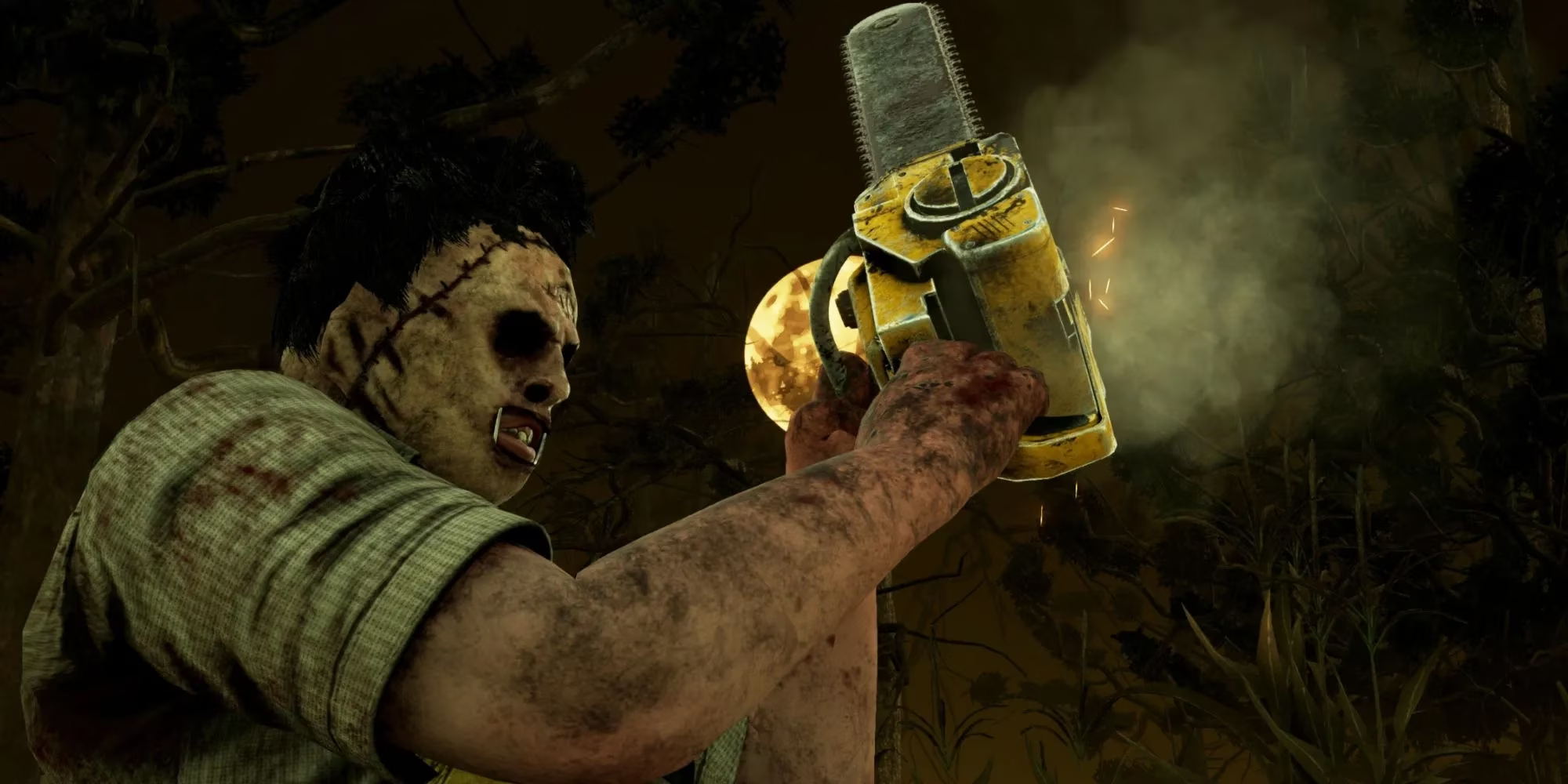
This wasn’t a cosmetic tweak—it was the digital equivalent of excising a malignant growth before it could poison the entire organism. The masks, once a mark of dedication, had been warped into blades of prejudice, much like a chef’s knife repurposed for cruelty instead of cuisine. Behaviour’s surgery was swift and came with a peace offering: anyone who had ever played The Cannibal by the mid-chapter update received 6,000 Iridescent Shards to compensate for the loss.
The incident pulled back the curtain on a much older infection. Online gaming has been plagued by racism, sexism, homophobia, and every strain of bigotry since the days of dial-up lobbies. Harassment, like a stubborn invasive weed, keeps resprouting in the damp corners of every multiplayer ecosystem, no matter how many times it gets pruned. Even one of Valorant’s executive producers once admitted she refuses to solo queue in her own game because of the abuse women face. Around the same time as the Leatherface affair, several Dead by Daylight streamers reported being DDOSed and swatted—proof that the toxicity was metastasizing well beyond text chat.
The mid-chapter update that axed the faces went live immediately, landing just ahead of the next full chapter that would introduce a character from the cult Japanese horror novel and film Ringu, adapted for Western audiences as The Ring. That chapter eventually brought Sadako, the Onryō, into the fog, but the real legacy of that December 2021 patch was the no-tolerance stance it codified. “We will not tolerate hateful activity and will continue to take every step necessary to protect the community,” Behaviour declared, and those words have aged into a foundational promise that still reverberates in 2026.
Fast‑forward to today, and the gaming landscape hasn’t been scrubbed clean—toxicity still thrives wherever anonymity and competition intersect. But Behaviour’s decisive removal of the Leatherface masks became a teaching moment for the entire industry. It showed that sometimes you have to amputate a beloved feature to safeguard the people it was never meant to hurt. In 2026, when studios debate whether to pull a controversial skin or emote, veteran community managers often point back to that exact case: a blunt, unambiguous deletion that cost short-term player goodwill but earned long-term trust.
Behaviour itself has kept its scalpel sharp. The team now runs automated detection systems that flag harassing behavior within seconds, and regular transparency reports show how many accounts get suspended for hate speech each quarter. The mid-chapter that erased the masks remains a touchstone in Dead by Daylight’s internal training—a reminder that cosmetic content, no matter how hard-earned, should never be allowed to become a weapon. Meanwhile, the ongoing narrative chapters continue to draw from global horror legends, and the 2026 roadmap promises fresh additions—though players know that on the cosmetic front, the rulebook is now written in iron.
In a medium that often lets toxicity fester until it becomes a PR nightmare, the Leatherface mask removal endures as a bright spot. It proved that even a deeply entrenched game economy can pivot overnight when player safety is on the line. And while the fight against online harassment is far from over, at least one developer showed the world that pulling the trigger on problematic content doesn’t break the game—it can save it.
Leave a Comment