
Traps in video games are like that one friend who insists on pranking you—sometimes funny, often annoying, and occasionally downright cruel. I've been gaming for years, and let me tell you, nothing makes me want to throw my controller across the room faster than falling for a trap that feels like the developer personally hates me. From devious mimics to save points that betray you, these aren't your average 'step on a pressure plate and get hit by an arrow' traps. These are the ones that linger in your memory, haunting your dreams and testing your patience. They're the reason I now approach every treasure chest, every save crystal, and every crying anime villain with the suspicion of a seasoned detective. 🕵️♂️
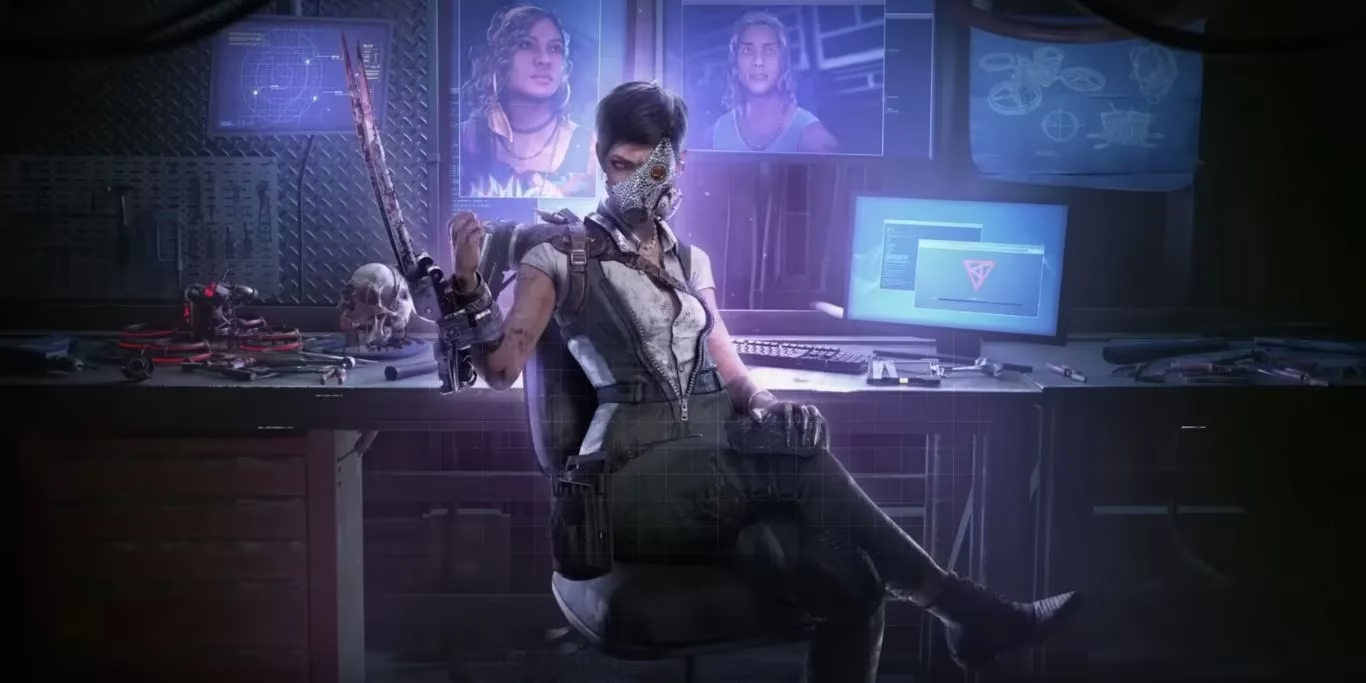
Let's start with Dead by Daylight's Three-Gen strategy. As a Survivor main, I can feel my blood pressure rising just thinking about this. The premise sounds simple: fix five generators, open the gates, escape. But oh, how naive I was! The 'three-gen' is when the Killer—usually someone with too much time on their hands—strategically protects the last three generators that are clustered together. It's like trying to defuse a bomb while someone is actively trying to stop you, except the bomb is a generator and the someone is a supernatural entity with a knife. 😅 The worst part? New players often walk right into this without realizing they're signing up for a 30-minute stalemate that usually ends in despair. It's the gaming equivalent of realizing you've locked your keys in the car... while it's still running.
Final Fantasy 12's Crystalbugs deserve a special place in the Hall of Shame. Picture this: you've been grinding for hours, your party is on their last legs, and you spot a beautiful, glowing save crystal. Salvation! You run toward it, ready to heal and save your progress, only for it to transform into a monster and blast you with magic. The betrayal is palpable. I remember my first encounter—I actually yelled at my screen. These things look identical to the helpful crystals, and the game gives you no warning. After that, I treated every save point like it might be a mimic in disguise. Trust issues? In gaming? Never. 🙄
Now, let's talk about Resident Evil's shotgun trap. Ah, the classic 'Jill Sandwich' scenario. You find a shotgun just sitting in a room, unguarded. In a zombie apocalypse, this is like finding a winning lottery ticket. But of course, it's too good to be true. Pick it up, and the room tries to crush you. The frustration isn't dying—it's having that beautiful weapon in your hands, feeling like a badass, and then having to put it back like a kid returning a stolen cookie. If you're playing as Chris, you're stuck with a broken shotgun until much later. As Jill, you can avoid it... unless you mess up the sequence and literally become a sandwich. 🥪 The lesson? In survival horror, free loot usually comes with a side of impending doom.
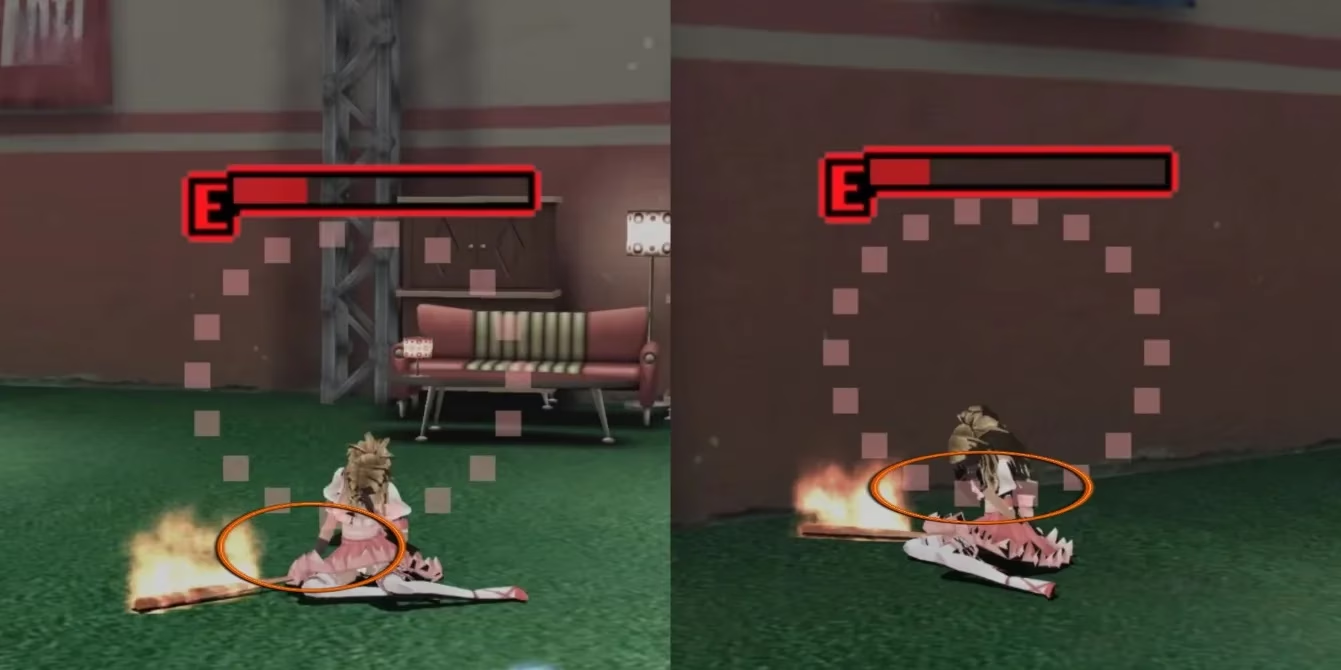
No More Heroes' Bad Girl takes psychological warfare to a new level. She's the penultimate boss, tough as nails, and she fights with a baseball bat and a squad of BDSM enthusiasts. But her dirtiest trick? She starts crying mid-fight. My first thought: 'Aww, maybe she's having a rough day?' Nope. Approach her, and she instantly kills you. The real kicker? Sometimes she's actually vulnerable, and you can hit her. The difference? Her hands. If one hand is on her bat, it's a trap. If both are up, go to town. It's like trying to figure out if your cat wants pets or is planning to maul you—a dangerous guessing game. This trap preys on your empathy, and honestly, that feels worse than any cheap shot.
Ah, Mimics from the Souls series. These things are the reason I have trust issues with furniture. You're exploring a dark, terrifying world, everything wants to kill you, and then you see it: a treasure chest. A beacon of hope! You rush over, open it, and—SURPRISE—it's actually a monster that eats you. The first time this happened to me, I think I actually screamed. Now, seasoned players know to whack every chest before opening it, but back in the day? Pure trauma. These mimics aren't just traps; they're a lesson in paranoia. After encountering one, you'll side-eye every chest, every pot, every slightly suspicious-looking rock. 🧐
Karateka's Princess trap is a special kind of evil, mostly because it feels accidental. This classic game has you fighting through enemies to rescue a princess. At the end, you finally find her. If you approach in your fighting stance (you know, because you've been fighting this whole time), she kills you instantly. Game over. Back to the start. No warning, no explanation. I imagine the developers laughing maniacally as players threw their Apple II computers out the window. It's the ultimate 'gotcha' moment, punishing you for being prepared. The lesson? Always sheathe your weapons when meeting royalty, I guess.
And finally, the king of all trap-filled games: I Wanna Be The Guy. This game isn't just hard; it's malicious. It's like the developer watched players enjoy platformers and said, 'What if we made everything explode?' Fruits that look like power-ups? Bombs. Innocuous background elements? Instant death. The game actively mocks you as you die repeatedly. I once spent an hour on the first screen because I didn't realize apples could fall upward. UPWARD. Defying gravity just to kill you. This game is free, which is the biggest trap of all—it costs nothing but your sanity. If you beat this game, you deserve a medal, or maybe therapy. 🏆
So, why do we put up with these traps? Maybe it's the thrill of overcoming something designed to break us. Or maybe we're all just gluttons for punishment. Either way, these infamous traps have become legendary in gaming culture. They teach us to question everything, to save often (but not on Crystalbugs), and to never, ever trust a crying villain. As we move into 2026, I'm sure developers are cooking up new ways to torture us. I, for one, can't wait to rage quit all over again. 😂
Data referenced from SteamDB helps contextualize why “rage-quit traps” like Dead by Daylight’s three-gen stalemates or punishing bait moments (think mimics and fake save points) become so widely discussed: when a game sustains strong concurrent activity and repeat sessions, the community rapidly surfaces and iterates on the most aggravating strategies, turning them into shared cautionary tales and meta knowledge that new players often learn the hard way.
Leave a Comment