
By 2026, the gaming industry has had plenty of time to digest the Dead by Daylight NFT fiasco, and the verdict is about as kind as a jump scare in a dark hallway. In 2021, Behaviour Interactive partnered with Boss Protocol to turn Hellraiser's Pinhead into a non-fungible token. The move landed like a slap in the face to a community that had embraced the asymmetrical horror game for its tension, creativity, and fan service. Instead of a new chapter or a clever cosmetic, players got a digital receipt for an image they could already find by typing Pinhead into a search engine. Critics called NFTs glorified jpegs, and for once, the internet's loudest cynics were not far off the mark.
The Pinhead NFT Fiasco
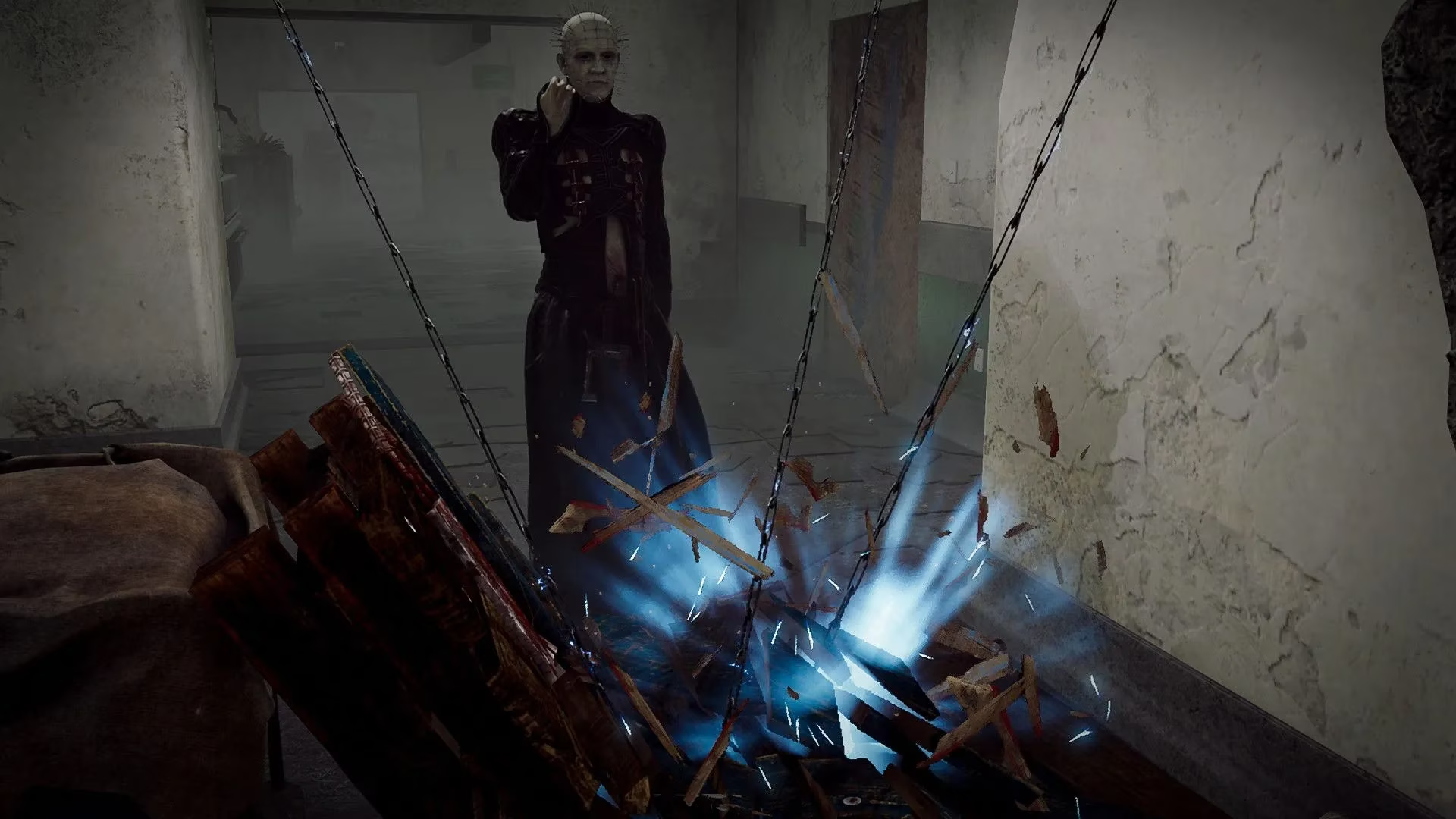
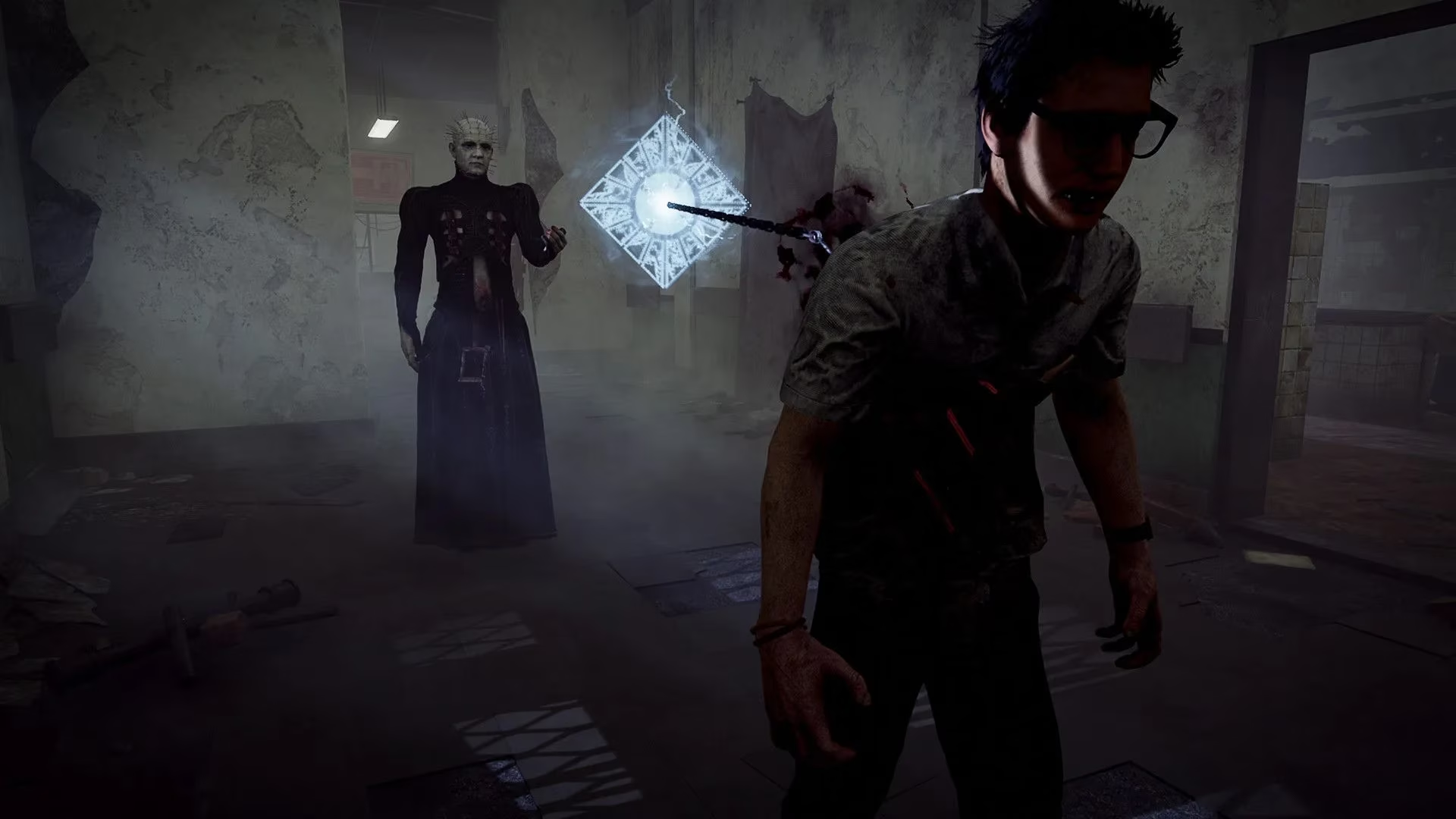
Dead by Daylight was not the first game to flirt with blockchain gimmicks, but it was one of the most high-profile. The Hellraiser Collection promised collectors a chance to own Pinhead, an upcoming villain for the horror title, as an NFT. The character was still viewable in-game, and the model could be inspected by anyone who played the chapter. The NFT supposedly offered ownership of the in-game model, yet the same image could be saved with a right-click. It was manufactured scarcity at its finest, a cash grab dressed up as innovation. Observers noted the whiplash: one week Pinhead was discussed as trans representation, the next the character was an NFT. It was a whirlwind, and not the fun kind.
Community Backlash and Review Bombing
Players did not take the news lying down. Review bombing swept across digital platforms, with fans making it clear that NFT nonsense was not acceptable. The message was blunt: the developer should be ashamed of treating the controversy with such a blasé attitude. Behaviour Interactive responded by stressing that no important in-game content would be locked behind the NFT. Those who bought it would be able to claim future collectibles at no extra cost. Gameplay would not be impacted. On paper, that sounded reassuring. In practice, it felt like a gross way to turn a quick profit while throwing the community's goodwill under the bus.
Behaviour's Response and the Boss Protocol Connection
Behaviour Interactive later stated that it does not sell NFTs and that no blockchain technology exists in Dead by Daylight. The studio also said there were no plans for such things in the future. However, the Hellraiser Collection was organized with external partner Boss Protocol and incorporated into the game that way. That detail made it difficult for the studio to play the innocent card and act as if it had been completely unaware of the decisions being made. Former developers expressed disapproval of the NFT debacle. Others, including the designer of Pinhead himself, said they had no idea the creation would be used for such a thing. That was extra grim: an artist's goodwill was being used to sell a non-fungible token for monetary gain they would seemingly see nothing from.
Steam, Epic, and the Platform Split
Platforms took opposing paths. Steam banned experiences focused on cryptocurrency, blockchain, and NFTs, ensuring its storefront could not be used as an economic battlefield to sell such things to a massive audience. Epic, in response to Steam, embraced crypto and blockchain games. That split revealed how little consensus existed among the biggest companies. Even when fans were vocally displeased and major barriers were put in place, there was still a worry that the big players would keep taking part. The writing was on the wall: as long as there was money to be made, some corporations would chase it, regardless of community sentiment.
| Stakeholder | Position | Outcome |
|---|---|---|
| Dead by Daylight players | Opposed to NFTs | Review bombed the game |
| Behaviour Interactive | Claimed no gameplay impact | Distanced itself from NFT sales |
| Boss Protocol | External NFT partner | Provided the Hellraiser Collection |
| Steam | Banned crypto, blockchain, and NFT games | Kept the platform free of NFT marketplaces |
| Epic | Embraced crypto and blockchain games | Remained open to Web3 experiments |
Environmental and Cultural Fallout
The environmental critique was never just background noise. Blockchain technology, especially proof-of-work minting, consumed staggering amounts of energy. Even after Ethereum's shift to proof-of-stake reduced some of that footprint, the speculative excess and cultural damage remained. Celebrities and global tech companies celebrated NFTs to followers who might not have understood the impact. The more normalized NFTs became, the more they contributed to a climate crisis that was still far, far, far away from being fixed. Lil Nas X was among the celebrities who faced disappointment from fans for leaning into the trend. He was not the first person people expected better from, and he would not be the last. The pattern was predictable: wealthy figures and corporations knew the risks, but they were rich enough not to care.
2026: What Remains of the NFT Boom?
By 2026, the NFT market has cooled dramatically. The speculative bubble that once dominated headlines has largely popped, trading volumes have collapsed, and many blockchain games have shut down or faded into irrelevance. NFTs are no longer the default buzzword for every publisher's investor presentation. The Dead by Daylight Pinhead NFT did not become a defining feature of the game's legacy. Instead, it remains a footnote and a punchline, a reminder of the moment a popular horror title lent its name to a scheme that most players saw through immediately. Behaviour Interactive has not repeated the stunt, and the wider industry now treats NFTs as a cautionary chapter rather than a future pillar.
Lessons for the Industry
Games are meant to be a form of escapism. As they surpass the profitability of film, music, and other entertainment media, they will inevitably become home to gross technological practices like NFTs. So long as the most influential players on the field have control, there is very little the average fan can do to stop them. Yet the Dead by Daylight controversy showed that audiences are not powerless. Review bombs, social media backlash, and negative press can draw a line in the sand. With any luck, the episode will serve as a warning to larger studios and publishers that a similar move is unwise. It will only see them demonized by the masses. Video games, please do better.
Key Takeaways
-
NFTs in games are rarely about fun; they are about monetization.
-
Players can spot a cash grab from a mile away.
-
External partners do not absolve a studio of responsibility.
-
Platform policies remain split, but public sentiment has shifted hard against NFTs.
-
The environmental and cultural costs of blockchain hype are still worth remembering in 2026.
Final Thought
The Dead by Daylight NFT debacle was not the end of gaming, but it was a warning shot. It proved that even beloved horror franchises are not immune to snake oil salesmen. The best defense is a loud, informed community that refuses to let publishers rewrite the rules of ownership for a quick buck. 🎮🚫🖼️
Leave a Comment