
It’s 2026, and I still get goosebumps thinking about the summer of 2022 when Behaviour Interactive dropped the infamous 6.1.0 PTB patch for Dead by Daylight. Back then, the fog felt different — heavier, more oppressive. The update landed on June 29 at 11AM ET, exclusively on the Steam Public Test Build, and within hours, the community was ablaze with hot takes, spreadsheet breakdowns, and desperate prayers to the Entity. Today, as I look back at that monumental shift, it’s clear that patch 6.1.0 wasn’t just a mid-chapter tweak; it was a tectonic plate grinding beneath the entire game, reshaping the landscape with the slow, unstoppable force of a glacier carving a new valley.
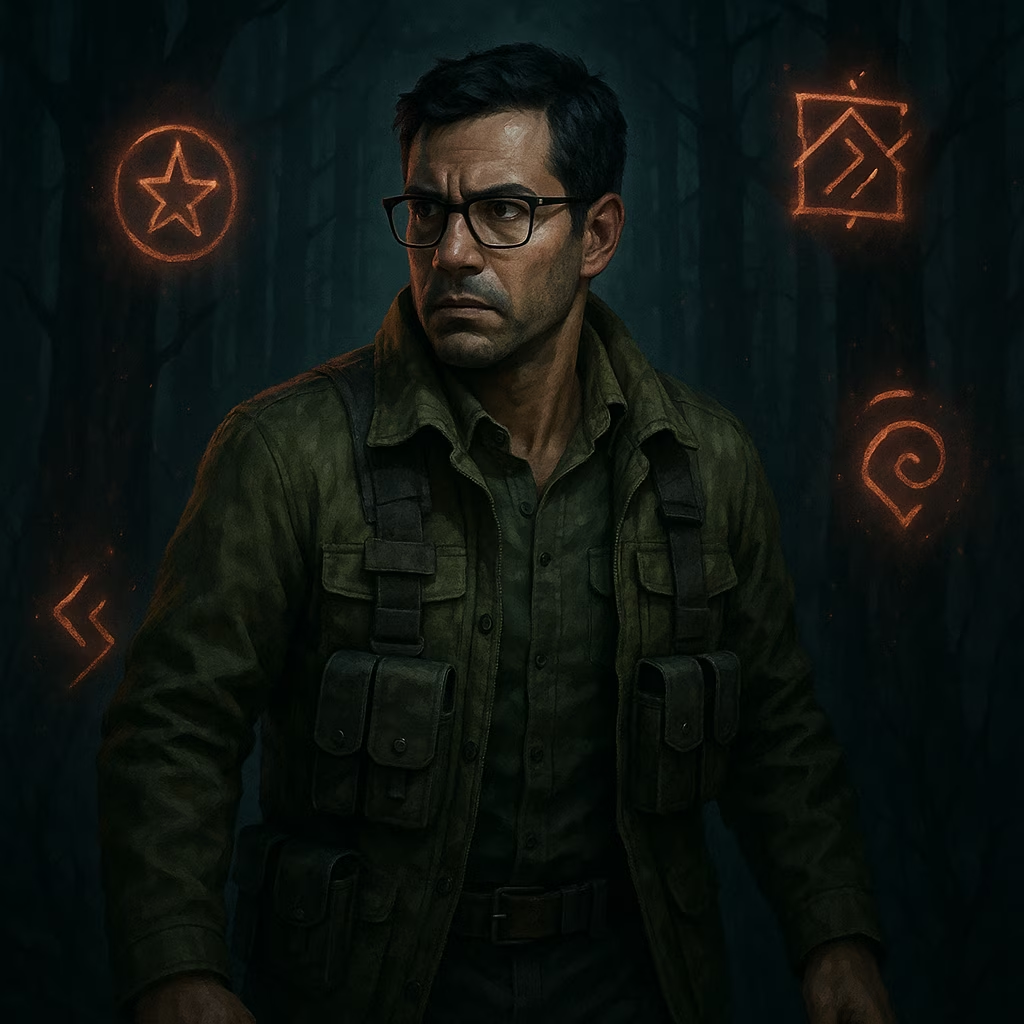
Let’s talk about the core gameplay changes first, because they hit like a wrecking ball through a wooden pallet. Generator repair times shot up from 80 to 90 seconds for a lone Survivor — an extra ten seconds that felt like an eternity, especially when your heart was pounding in your ears. Killers no longer just started regression with a kick; they now instantly shaved off 2.5% progress, making every boot print on a generator a tiny victory. And the best part? Bloodlust trigger times got buffed. Tier 2 now kicked in at 25 seconds instead of 30, and Tier 3 at 35 instead of 45. This was like giving a race car a nitrous boost after a shorter delay, allowing Killers to close loops with terrifying precision. Killers also moved through their actions 10% faster — kicking pallets and generators, cooling down after hits — while Survivors’ post-hit speed boost was cut from 2 seconds to 1.8. It was a symphony of small numbers humming in deadlier harmony.
But the real headline that day was the baseline Borrowed Time effect. Survivors off the hook gained 7% movement speed and Endurance for 5 seconds, no perks required. If you’ve ever unhooked someone in the face of a face-camping Cannibal, you know that this was a pressure valve releasing just enough steam to prevent the whole machine from exploding. Of course, a tap of a Conspicuous Action — repairing, healing, cleansing, opening gates — would instantly cancel the buff, like a soap bubble popping against a rough surface. The term itself was officially added to the Game Manual, codifying what we all intuitively knew: you can’t have your safety net and mend under it too.
The Killer perk overhaul was as spicy as a ghost pepper rubbed into a wound. Barbecue & Chili, once the undisputed king of information, had its aura-reading extended by Lethal Pursuer’s new effect, creating brutal synergy. Hex: Ruin was reworked to be a passive regression beast — while a generator wasn’t being worked on, it would erode at 50/75/100% of normal speed, and the totem turned dull after any kill, meaning the Entity no longer had to babysit a lit totem that screamed “Cleanse me!”. Corrupt Intervention now deactivated if any Survivor entered the dying state, which was like a chess clock forcing the Killer to make a move before the advantage evaporated. Eruption’s incapacitation got stretched to a leg-breaking 15/20/25 seconds, and Overcharge’s regression curve became a descending staircase into generator paralysis. Then there was Scourge Hook: Pain Resonance — that 20% current progress loss combined with the new base kick regression felt like throwing a wrench into a humming engine. Monstrous Shrine metamorphosed into Scourge Hook: Monstrous Shrine, accelerating Entity progression from basement hooks and far-away Scourge spots, a sort of silent clock that ticked faster the more you respected the killer’s distance.
On the Survivor side, it was a bloodbath of nerf bats and rework saws. Dead Hard, oh dear Dead Hard, shed its dash mechanic entirely. Activating it now granted Endurance for just one second, accompanied by an unmistakable animation — a visual tell that screamed “I’m vulnerable, please swing now!” It was like watching a magician reveal the secret to his trick mid-performance. Decisive Strike had its stun slashed from 5 seconds to 3, and the perk disabled itself if exit gates were powered or if you dared a Conspicuous Action. Self-Care speed was gutted to 25/30/35%, making solo-healing in a corner about as effective as trying to fill a bathtub with a teaspoon. Borrowed Time was reworked into an extension buff, stacking on the baseline Endurance now granted to unhooked Survivors. Iron Will lost its Exhaustion-free silence and now only muffled grunts by 75% at tier 3. Calm Spirit, though, became a stealthy treasure: 100% crow avoidance and silent chest/totem interactions, but at a creeping 40/35/30% speed penalty — a slow drip of noise suppression that turned you into a ghost with heavy feet.
And then came the progression renaissance. Teachable Perks vanished from the Bloodweb like smoke in a hurricane. Instead, prestiging a character to level 1 instantly unlocked their perks at Tier 1 for all other Killers or Survivors. Prestige 2 gave tier 2, and Prestige 3 tier 3 — a universal sharing system that felt like a communal library finally opening its doors. Between Prestige 4 and 9 you’d earn bloody cosmetics and unique perk charms. The cap went up to a dizzying 100 prestige levels, and each portrait could flaunt a legacy crest, a badge of honor for the truly devoted. Existing players were grandfathered in: old prestige levels converted one-for-one (up to 3), plus bonus levels based on total perks unlocked. I remember checking my Claudette and finding her catapulted to Prestige 7 just from the perk library I’d amassed. The Shrine of Secrets got a parallel makeover — now you could buy a perk’s tier directly with Iridescent Shards, up to tier 3, with discounts if you’d earned it via prestige. It was a system that finally respected our time, like a banker who suddenly started paying interest.
Matchmaking Incentives arrived as a sleek bloodpoint carrot. When the survivor-to-killer ratio skewed, the game dangled bonus bloodpoints in front of you to fill the needy role. This simple lever became the lubricant that reduced queue times significantly, a welcome gift in a game where waiting in lobby sometimes felt longer than the trial itself.
Under the hood, Behaviour ironed out a laundry list of bugs. Dredge’s head stopped clipping through lockers, Hillbilly couldn’t catapult himself into unreachable zones anymore, and The Artist’s crows finally recognized dying survivors. Knock Out’s aura-reading was fixed to apply only on basic attacks, and Lucky Break no longer ticked at the match start if you had No Mither. There were audio optimizations on Midwich, a fix for The Hag’s range add-ons, and even a patch for the flashbang’s fear of stairs. Every one of these fixes felt like pulling splinters out of a well-worn floor — uncomfortable but ultimately smoother.
Looking back from 2026, patch 6.1.0 was the pivot point where Dead by Daylight truly matured. It shifted the meta like a kaleidoscope twisted just a few degrees, creating patterns no one had seen before. Killers became sharper instruments of pressure; Survivors learned to move with tighter margins. The prestiging overhaul turned the grind from a hamster wheel into a journey of prestige crests and cross-character mastery. I still run into players who never experienced the pre-6.1.0 chaos, and I envy them a little — but I also feel proud that I was there when the fog lifted and revealed a new shape lurking behind it. If you ever want to understand why DBD feels the way it does today, trace its pulse back to June 29, 2022, and listen to the heartbeat that still echoes.
Leave a Comment