
As a lifelong gamer, I've always been fascinated by stories where a single, seemingly simple action spirals into catastrophic consequences. The ancient myth of Pandora's Box, a tale of curiosity unleashing unimaginable evils into the world, isn't just a relic of the past; it's a living, breathing narrative device that has been masterfully woven into the very fabric of some of my favorite video game worlds. In 2026, reflecting on these digital legends, I realize that these "boxes"—be they literal containers, cursed artifacts, or forbidden knowledge—are more than just plot points. They are profound lessons in temptation, consequence, and the thin line between hope and ruin, all experienced from the first-person perspective of a player navigating their dangers.
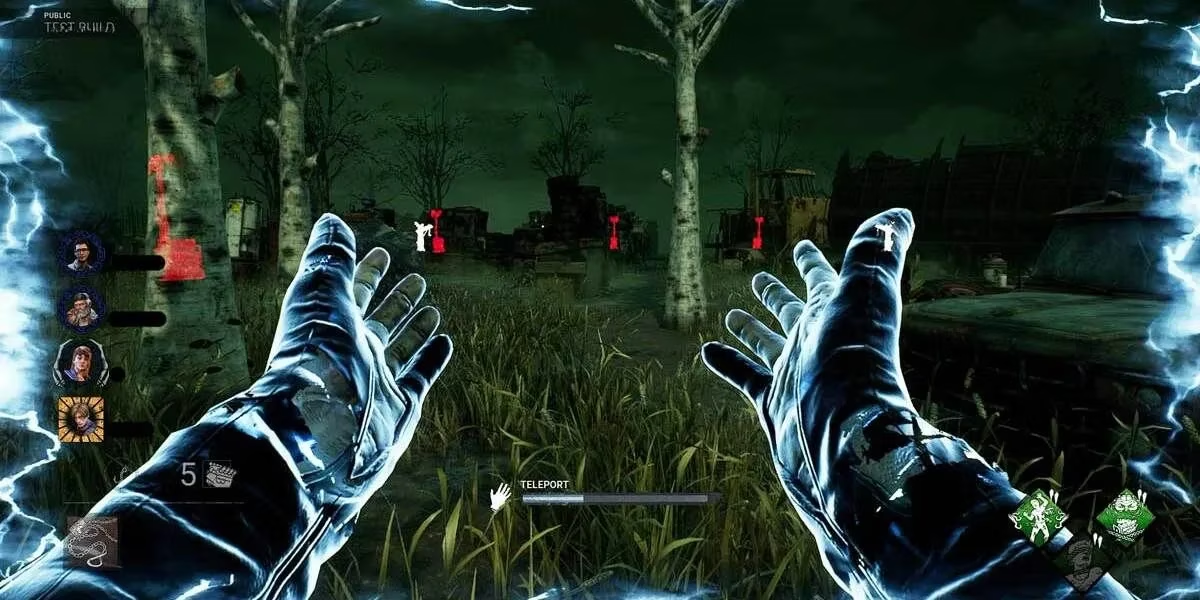
My most visceral encounter with a modern Pandora's Box happened in the fog-shrouded trials of Dead by Daylight. The introduction of Pinhead and his Lament Configuration was a game-changer. This puzzle box, a direct homage to the myth, isn't just a prop; it's a terrifying mechanic. As a survivor, the desperate scramble to solve the complex configuration to stop Pinhead's relentless chain attacks feels like the ultimate gamble. You're actively choosing to open that proverbial box. The moment you solve it, a chilling silence often falls... followed by the horrific sound of Pinhead materializing right behind you. That automatic teleport is the "unforeseen negative consequence" made brutally personal. It taught me that sometimes, the solution to immediate terror only invites a more focused and personal doom. The Cenobites' entire philosophy, exploring sensation through extreme pain and pleasure, reframes Pandora's jar as a gateway not just to evil, but to a cosmic, sadistic revelation.
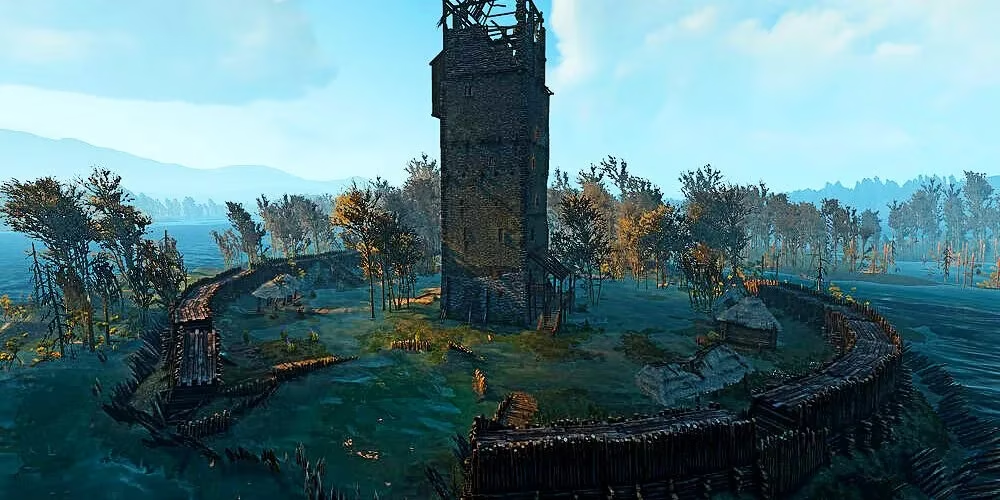
Another lesson in tragic consequences came during my time as Geralt of Rivia in The Witcher 3: Wild Hunt. The quest 'A Towerful of Mice' on Fyke Isle presented a classic, heartbreaking Pandora's Box scenario. Confronting the spectral Anabelle, I was moved by her tale of lost love and believed I was performing a noble act: reuniting her bones with her beloved fisherman, Graham. The choice seemed clear—lift a curse with love. I undertook the eerie task, retrieving her remains from the desolate tower. 😨 Delivering the bones to Graham was poignant; his grief was palpable. But the true horror unfolded off-screen. After I left, his screams echoed, and I later learned the devastating truth. Anabelle was a Pesta, a plague maiden. By moving her bones from the island, I hadn't ended a curse—I had unleashed it. My act of perceived mercy opened the box, allowing death and disease to roam free, nearly destroying the kingdom of Kerack. This narrative twist haunts me; it perfectly encapsulates how good intentions can unknowingly release the very evils one seeks to contain.
The theme of containment—and catastrophic failure—is central to the Diablo series. My journey through the saga felt like watching a Pandora's Box being opened in slow motion across generations. In the earliest days, the hero Aidan's desperate attempt to contain Diablo's essence by plunging the Soulstone into his own flesh was a monumental act of sacrifice. Yet, like Pandora slamming the lid too late, it was ultimately futile. I witnessed his corruption into the Dark Wanderer, a vessel of doom who journeyed east to free his demonic brethren. This arc taught me that evil, once unleashed, is relentless. It corrupts, spreads, and turns the tools of its imprisonment into instruments for its release. The shattered Soulstones scattered across Sanctuary are permanent reminders that some boxes, once opened, can never be truly closed.
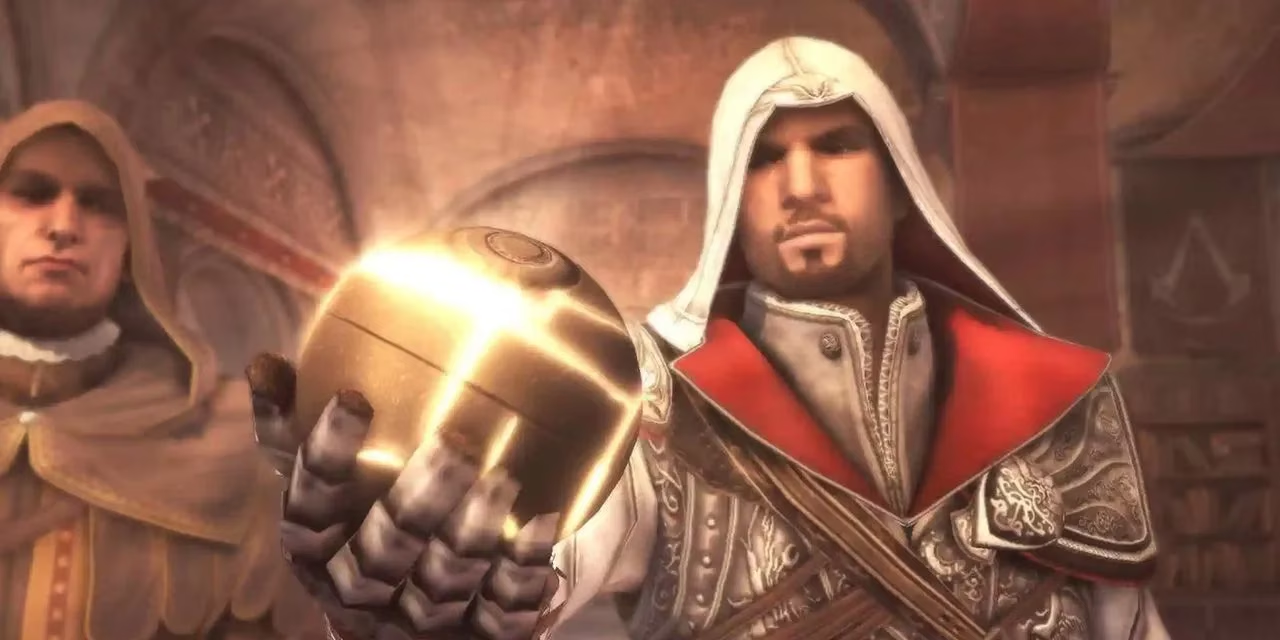
Perhaps the most pervasive and powerful boxes I've encountered are the Apples of Eden in the Assassin's Creed universe. These Isu artifacts are the ultimate Pandora's Boxes: remnants of a lost civilization with the power to bend reality, sway wills, and rewrite history. Controlling Altaïr, I saw firsthand how the Apple revealed the hidden avarice of my mentor, Al Mualim. The artifact didn't create his lust for power; it merely unveiled it, acting as a catalyst for disaster. Learning about its subsequent journey through history—touched by figures like Queen Elizabeth I and Mahatma Gandhi—was staggering. Each possession was a potential opening, a moment where absolute power could corrupt absolutely. These Pieces of Eden represent the core dilemma: knowledge and power themselves can be the box, and their allure is the curiosity that drives us to open it, regardless of the epoch.
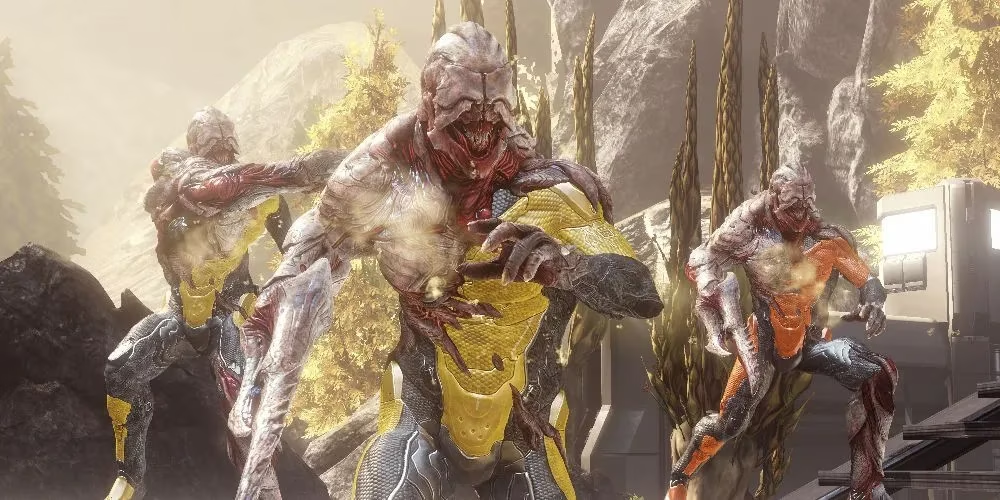
My most harrowing experience of unleashing an unknown terror came on the Forerunner ringworld, Installation 04, in the original Halo. What the Covenant and my fellow UNSC marines believed to be a grand weapon—a Forerunner relic—was, in fact, the galaxy's most terrifying Pandora's Box. The initial discovery by the Covenant was bad enough, but the true "opening" came with Captain Keyes's mission. In seeking a tactical advantage, we inadvertently released the Flood. This parasitic scourge was beyond any conventional evil; it was a consuming, existential threat. The frantic battles through infected corridors, watching allies fall and be assimilated, felt like living the myth in real-time. We had reached for a tool of salvation and instead unleashed a ravenous damnation that threatened all sentient life. It was a masterclass in sci-fi horror, showing that the most dangerous boxes are often mislabeled.
Reflecting on these adventures from my perspective as a player, a clear pattern emerges. These digital Pandora's Boxes serve as profound narrative engines:
-
The Gambit of Power: Whether it's the Lament Configuration or an Apple of Eden, the promise of power or solution is the primary temptation.
-
The Illusion of Control: Characters like Aidan or Al Mualim believe they can control or use the box's contents, only to be consumed by them.
-
The Cascade of Consequences: A single action—solving a puzzle, moving bones, shattering a stone—unlocks a chain of events far beyond the initial scope.
| Game | The "Box" | The Consequence |
|---|---|---|
| Dead by Daylight | Lament Configuration | Pinhead's teleport & focused torment |
| The Witcher 3 | Anabelle's Bones | Unleashing a plague maiden on the world |
| Diablo | The Soulstone | Corruption of the hero & release of Prime Evils |
| Assassin's Creed | Apple of Eden | Mind control, historical manipulation, war |
| Halo | Flood Containment | Galactic parasitic outbreak & genocide |
In the end, these stories stay with me because they mirror our own world's dilemmas. They ask us what risks we are willing to take for knowledge, power, or a chance to do good. As of 2026, these virtual cautionary tales remain more relevant than ever, reminding me that sometimes, the most heroic act is not in opening a mysterious box, but in having the wisdom to leave it sealed. 🎮
Leave a Comment